www vivitar com user manual
Vivitar Camera & Flash Unit User Manuals: A Comprehensive Guide
Discover a wealth of resources for Vivitar camera and flash units! Explore manuals from Orphan Cameras‚ Internet Archive‚ ManualsLib‚ and M. Butkus‚ dating back to 1997.
Vivitar cameras‚ historically known for affordability and accessibility‚ have a rich legacy in the photography world. While www.vivitar.com currently focuses on modern digital lifestyle products‚ the brand’s roots lie in offering a wide range of film cameras and accessories. For enthusiasts seeking manuals for these classic models‚ resources like Orphan Cameras and the Internet Archive are invaluable.

Vivitar often partnered with Japanese manufacturers like Cosina‚ resulting in cameras with solid build quality despite their lower price points. This collaborative approach allowed Vivitar to offer diverse options‚ including point-and-shoot‚ SLR‚ and flash units. Finding documentation for these older cameras can be challenging‚ but dedicated online archives are preserving these resources. The M. Butkus library‚ in particular‚ has been a long-standing source of free camera manuals since 1997‚ including a substantial collection of Vivitar models.
Historical Overview of Vivitar
Vivitar emerged in the 1960s as a distributor of photographic accessories‚ quickly expanding into camera manufacturing. The company distinguished itself by offering affordable alternatives to established brands‚ often through partnerships with Japanese manufacturers like Cosina. This strategy allowed Vivitar to provide a broad range of cameras – from simple point-and-shoots to more advanced SLRs – at competitive prices.
Throughout the 1970s and 80s‚ Vivitar became a household name‚ known for its accessible photography solutions. While www.vivitar.com now showcases modern products‚ the brand’s historical significance lies in democratizing photography. The availability of free manuals‚ as championed by resources like Orphan Cameras and the M. Butkus library‚ reflects the enduring interest in these classic cameras. The Internet Archive also preserves a growing collection of Vivitar documentation‚ ensuring these resources remain accessible to enthusiasts and collectors.
Where to Find Vivitar Manuals Online
Locating Vivitar camera and flash unit manuals online is surprisingly accessible‚ thanks to dedicated archiving efforts. Orphan Cameras.com‚ featuring the M. Butkus library‚ offers a vast collection of freely available film camera instruction manuals‚ continually updated since 1997. The Internet Archive is another invaluable resource‚ providing downloadable PDFs and streaming access to manuals‚ including mini digital camera operation guides and 1997 point-and-shoot versions.
ManualsLib also hosts a selection of Vivitar product manuals. While www.vivitar.com may not directly offer extensive historical documentation‚ these external sites fill the gap. The Internet Archive’s DAISY feature caters to users with print disabilities‚ enhancing accessibility. Remember to explore the Internet Archive’s search function using specific model numbers for targeted results‚ ensuring you find the correct manual for your Vivitar device.
Understanding Vivitar Camera Types
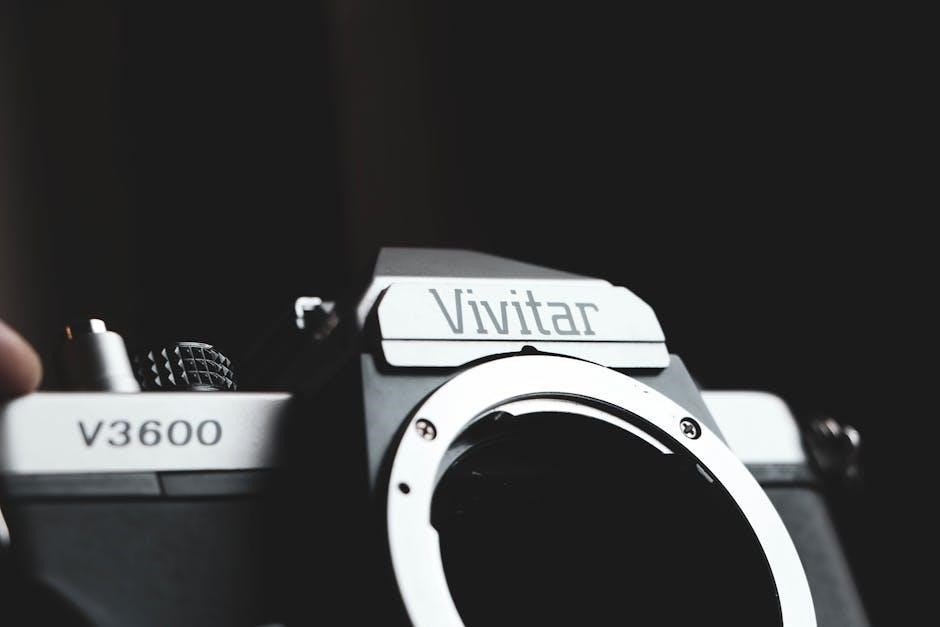
Vivitar produced diverse cameras‚ including point-and-shoot‚ mini digital models‚ and accompanying flash units. Manuals cater to each type‚ aiding operation and troubleshooting.
Point and Shoot Cameras
Vivitar’s point and shoot cameras represent a significant portion of their historical production‚ offering simplicity and convenience for casual photographers. Finding a manual for these models is often achievable through resources like the M. Butkus Camera Manuals Library‚ which boasts a collection dating back to 1997.
The Internet Archive also hosts scanned manuals‚ including a multi-language manual specifically for a 1997 Vivitar point and shoot. Be aware that some scans‚ as noted on the Internet Archive‚ may have imperfections due to the scanning and editing process – images might not be perfectly squared.
These manuals typically cover basic operation‚ film loading (for older models)‚ flash usage‚ and troubleshooting common issues. Accessing these resources provides valuable insight into operating and maintaining these classic cameras‚ ensuring continued enjoyment for years to come; Remember to check ManualsLib as well for potential options.
Mini Digital Cameras
Vivitar’s foray into digital photography included a line of mini digital cameras‚ and locating operational manuals for these models can be done through the Internet Archive. A specific example available is the “vivitar ౼ camera ౼ Mini Digital Camera ౼ Operation Manual‚” identified as central-manuals-camera_vivitar_Mini_digi_en.pdf.
This resource‚ hosted on the Internet Archive‚ offers free download‚ borrowing‚ and streaming options. The file is processed with ABBYY FineReader 11.0 for enhanced OCR and is available in a high-resolution 600 PPI scan. It has garnered over 1‚630 views and one favorite‚ indicating its usefulness to other users.
These manuals generally detail camera setup‚ image capture‚ file transfer‚ and basic troubleshooting. The Internet Archive also provides a DAISY feature for users with print disabilities‚ enhancing accessibility. The file size is approximately 21.2M and was added to the archive on February 11‚ 2021.
Vivitar Flash Units
Vivitar produced a diverse range of flash units alongside its cameras‚ and finding instruction manuals for these can be crucial for optimal performance. Orphan Cameras.com‚ specifically the M. Butkus library‚ is a key resource‚ offering a collection of flash unit manuals available for free since 1997.
The M. Butkus library emphasizes finding all information for your specific camera model on their site. They also directly address potential issues with opening or printing PDF files‚ offering troubleshooting guidance. Locating specific flash unit models within the library requires careful searching‚ as the collection is extensive.
Understanding flash settings – such as power levels‚ modes (TTL‚ manual)‚ and bounce capabilities – is vital. Manuals detail these features and provide guidance on achieving desired lighting effects. Troubleshooting sections address common operational issues‚ helping users resolve problems independently. Accessing these resources ensures users can fully utilize their Vivitar flash units.
Accessing Manuals via Internet Archive
Internet Archive provides free access to Vivitar manuals‚ including Mini Digital Camera operations guides and 1997 Point and Shoot models‚ via download or streaming.
Downloading Manuals from Internet Archive
Accessing and downloading Vivitar camera manuals from the Internet Archive is a straightforward process. Numerous models‚ spanning point-and-shoot cameras to flash units‚ are readily available in PDF format. Users can easily locate desired manuals through the site’s search function‚ utilizing keywords like “Vivitar” combined with the specific camera or flash unit model number.
Once a manual is found‚ a “download” option is prominently displayed. Clicking this initiates the download of the PDF file to your computer. The Internet Archive also provides details about each manual‚ including its identifier-ark‚ OCR information (indicating text searchability)‚ and scanner details. Files range in size‚ with some‚ like the Mini Digital Camera manual‚ reaching 21.2MB. The platform boasts over 1‚630 views for some manuals‚ demonstrating their popularity among vintage camera enthusiasts and those seeking operational guidance.
Furthermore‚ the Internet Archive supports various download formats‚ including ABBYY GZ‚ catering to diverse user preferences and accessibility needs. This ensures a convenient and accessible experience for anyone needing to consult a Vivitar manual.
Using Internet Archive’s DAISY Feature
The Internet Archive offers a valuable accessibility feature called DAISY (Digital Accessible Information System)‚ designed specifically for users with print disabilities. This functionality transforms standard PDF manuals‚ including those for Vivitar cameras and flash units‚ into a more navigable and user-friendly format.
By selecting the “Generate DAISY” option available on certain manual pages‚ users can create a version optimized for screen readers and other assistive technologies. This allows individuals with visual impairments to easily access and understand the information contained within the Vivitar manuals. The DAISY format provides enhanced structural navigation‚ enabling users to jump between chapters‚ sections‚ and even individual paragraphs with ease.
This feature is particularly beneficial for complex manuals or those with detailed technical specifications. It demonstrates the Internet Archive’s commitment to inclusivity and ensuring that valuable resources like vintage camera documentation are accessible to everyone‚ regardless of their abilities. Utilizing DAISY expands the usability of Vivitar manuals significantly.
Navigating Internet Archive Search for Vivitar
The Internet Archive’s search functionality is key to locating Vivitar camera and flash unit manuals. Begin by entering specific keywords like “Vivitar camera manual‚” “Vivitar flash unit‚” or the model number of your device into the search bar. Refine your search using filters on the left-hand side of the results page.
Utilize filters such as “Collection” and select “manuals_contributions” or “manuals” to narrow results to documentation. You can also filter by “Item Type” to specifically target manuals. Pay attention to the “Identifier” field (e.g.‚ manuallib-id-2511755) as it provides a unique link to the manual.
The search results display details like views‚ favorites‚ and download options. Look for PDFs labeled with “Operation Manual” or similar terms. Remember that some scans may be imperfect‚ as noted for a 1997 Vivitar point and shoot manual‚ but still offer valuable information. Consistent keyword variations will yield the best results.
Troubleshooting Manual Access
Encountering issues? Check PDF compatibility‚ update your reader‚ or try a different browser. Orphan Cameras offers advice for PDF and printing problems.
PDF File Opening Issues
Experiencing difficulties opening your Vivitar camera or flash unit manual in PDF format? Several factors could contribute to this frustrating issue. First‚ ensure you have a compatible PDF reader installed on your device – Adobe Acrobat Reader is a widely recommended and free option. If you already have a PDF reader‚ verify it’s updated to the latest version‚ as older versions may lack support for newer PDF features.
Sometimes‚ the PDF file itself might be corrupted during download. Try downloading the manual again from the source‚ such as the Internet Archive or M. Butkus Camera Manuals Library. A slow or interrupted internet connection can also lead to incomplete downloads. Clear your browser’s cache and cookies‚ then attempt the download once more.
If the problem persists‚ your browser’s built-in PDF viewer might be causing the conflict. Disable the browser’s PDF viewer and force the file to open in your dedicated PDF reader. Finally‚ consider that very old or unusually formatted PDFs may require specialized software to open correctly.
Printing Problems with Manuals
Encountering issues when printing your downloaded Vivitar camera or flash unit manual? Several common problems can arise. First‚ confirm your printer is properly connected and has sufficient ink or toner. Ensure the correct printer is selected in the print dialog box. Often‚ PDFs downloaded from sources like the Internet Archive or M. Butkus may have formatting that requires specific printer settings.
Try adjusting the print settings. Select “Fit to Page” or a similar option to ensure the entire manual prints without being cut off. Experiment with different paper sizes and orientations (portrait or landscape). If the print quality is poor‚ increase the DPI (dots per inch) setting.
Occasionally‚ the PDF itself may contain embedded fonts that your printer doesn’t recognize‚ leading to printing errors. Updating your printer drivers can resolve this. As a workaround‚ you can try printing the manual to a PDF printer‚ then printing the newly created PDF file.
Common Errors and Solutions
While accessing Vivitar manuals‚ users may encounter several frustrating errors. A frequent issue is the inability to open PDF files. This often stems from a corrupted download or an outdated PDF reader. Ensure you have the latest version of Adobe Acrobat Reader or a compatible PDF viewer installed. Re-downloading the file from sources like Internet Archive or ManualsLib can also resolve this.
Another common problem is slow download speeds or interrupted downloads‚ particularly with larger manual files. A stable internet connection is crucial. If downloads consistently fail‚ try a different browser or download manager. Occasionally‚ websites like M. Butkus may experience temporary server issues‚ so patience or revisiting later is advised.
Finally‚ some users report issues with file compatibility. If a manual won’t open‚ try right-clicking the file and selecting “Open with…” then choosing a different PDF reader. Remember to scan downloaded files with antivirus software before opening them.
Specific Manual Resources
Explore dedicated online libraries like M. Butkus Camera Manuals and ManualsLib for extensive Vivitar collections‚ including 1997 point-and-shoot models‚ readily available.
M. Butkus Camera Manuals Library
M. Butkus offers a remarkable‚ freely accessible library of camera instruction manuals‚ a valuable resource for Vivitar users seeking documentation. Since 1997‚ this site has diligently collected and shared film camera manuals‚ and it continues to be a go-to destination for enthusiasts.
The library boasts a comprehensive selection of Vivitar manuals‚ covering a wide range of models‚ including both cameras and flash units. Users can easily navigate the site to find the specific manual they need‚ often discovering models no longer supported by the manufacturer.
Butkus explicitly states that all information is available for free‚ though donations are gratefully accepted. The site emphasizes finding all camera model information in one convenient location. It’s a particularly useful resource for troubleshooting PDF opening or printing issues‚ directing users to solutions for common problems encountered when accessing older manuals. This dedication to preservation and accessibility makes the M. Butkus library an invaluable asset for the Vivitar community.
ManualsLib for Vivitar Products
ManualsLib serves as a substantial online repository for user manuals‚ schematics‚ and related documentation‚ including a dedicated section for Vivitar products. This platform offers a convenient way to access manuals for a diverse array of Vivitar cameras and flash units‚ often providing multiple options for download or viewing.
The site’s search functionality allows users to quickly locate manuals based on model number or keywords. Identified within the Internet Archive‚ a Vivitar digital camera instruction manual is available through ManualsLib‚ cataloged under collections like ‘manuals_contributions’ and ‘manuals’.
The ManualsLib entry for this particular manual (identified as manuallib-id-2511755) is a 21.2MB file‚ added on February 11‚ 2021. It utilizes OCR technology (tesseract 5.0.0) for text recognition. This resource provides a valuable alternative for those seeking official documentation or troubleshooting guides for their Vivitar equipment.
1997 Vivitar Point and Shoot Manuals
The Internet Archive hosts a multi-language manual specifically for Vivitar point and shoot cameras manufactured in 1997. This resource is particularly useful for owners of older Vivitar models seeking original documentation. It’s important to note that the scanning process was rapid‚ resulting in images that aren’t perfectly aligned or squared‚ but the content remains accessible.
This manual provides instructions for operation‚ features‚ and basic troubleshooting for these classic cameras. While a direct link to www.vivitar.com for these older models may not yield results‚ the Internet Archive serves as a digital preservation effort‚ ensuring these manuals remain available.
Users can freely download‚ borrow‚ and stream this manual‚ contributing to the archive’s mission of universal access to knowledge. The availability of such resources highlights the dedication to preserving the history of photography and camera technology‚ even for discontinued products like these Vivitar point and shoot cameras.
Vivitar Flash Unit Manuals
Locate specific Vivitar flash unit models via Orphan Cameras and M. Butkus. Understand settings and troubleshoot operation – PDF help is available!
Locating Specific Flash Unit Models
Finding the correct manual for your Vivitar flash unit requires a bit of detective work‚ as model numbers are crucial. Resources like Orphan Cameras‚ specifically the M. Butkus library‚ are excellent starting points. This library has diligently archived a substantial collection of vintage camera and flash manuals‚ often available for free download.
When searching‚ be as precise as possible with the model number‚ often found on a label affixed to the unit itself. If the label is missing or illegible‚ carefully examine the flash unit’s physical characteristics and compare them to images available online. The Internet Archive may also contain scanned manuals‚ though navigation can sometimes be less direct.
Remember that Vivitar often manufactured flash units under different brand names or for other companies‚ so broadening your search terms might yield results. Don’t hesitate to explore forums and online communities dedicated to vintage photography; experienced users may be able to identify your model and point you towards the appropriate manual.
Understanding Flash Settings
Vivitar flash units‚ even older models‚ offer a range of settings to control light output and effect. Common settings include power levels – typically expressed in f-stops or guide numbers – which determine the flash’s intensity. Lower power settings are ideal for close-up shots‚ while higher settings are needed for distant subjects or larger apertures.
Many Vivitar flashes feature mode selectors‚ offering options like Auto‚ Manual‚ and sometimes TTL (Through-The-Lens) metering. Auto mode attempts to automatically adjust power based on ambient light‚ while Manual mode gives you complete control. Understanding the guide number is key; it represents the flash’s power relative to a specific ISO setting.
Other settings may include high-speed sync (HSS) for freezing motion‚ red-eye reduction‚ and bounce flash capabilities. Consulting your specific flash unit’s manual – found on resources like Orphan Cameras and the Internet Archive – is crucial for fully grasping its features and achieving optimal results.
Troubleshooting Flash Unit Operation
Vivitar flash units‚ like any electronic device‚ can occasionally experience issues. A common problem is the flash not firing; check battery levels first‚ ensuring correct polarity. Verify the unit is securely attached to the camera’s hot shoe and that the camera is set to flash mode. If the flash fires intermittently‚ try cleaning the hot shoe contacts with a soft‚ dry cloth.
If the flash consistently under or overexposes‚ review your power settings and guide number calculations. Incorrect settings are a frequent cause. For units with TTL capabilities‚ ensure compatibility with your camera model. If experiencing PDF opening or printing problems with the manual‚ refer to resources mentioned on Orphan Cameras.
Consulting the specific manual‚ available via the Internet Archive or M. Butkus‚ provides detailed troubleshooting steps for your particular Vivitar flash model. Remember to disconnect the flash before attempting any cleaning or repairs.
Related Posts

how to open automatic gate manually
Automatic gate not opening? Don’t panic! Our easy-to-follow guide shows you how to safely release & open your gate manually. Get back in quickly!

napoleon fireplace remote control manual
Lost your Napoleon fireplace remote control manual? Don’t sweat it! We’ve got a huge library of manuals to get your cozy fire blazing again. Find your **remote control** guide here!
panasonic kx-dt343 user manual
Lost your Panasonic KX-DT343 user manual? Find everything you need right here – troubleshooting, setup, and all the features explained simply. Get back to talking!