canon 5d mark 4 manual
Canon EOS 5D Mark IV Manual: A Comprehensive Guide
This guide offers detailed instructions, covering setup, autofocus, 4K video, and workflow, ensuring users maximize their Canon EOS 5D Mark IV’s potential.

The Canon EOS 5D Mark IV is a professional-grade DSLR renowned for its exceptional image quality and versatile features. Released in 2016, it quickly became a favorite among photographers and videographers. This manual serves as a comprehensive resource, guiding you through every aspect of this powerful camera.
Featuring a 30.4MP full-frame CMOS sensor and the DIGIC 6+ image processor, the 5D Mark IV delivers stunning detail and clarity. It’s capable of recording 4K video and boasts Dual Pixel CMOS AF for smooth, accurate focusing. Whether you’re a seasoned professional or a dedicated enthusiast, this guide will help you unlock the full potential of your Canon EOS 5D Mark IV.
Understanding the Camera’s Key Features
The Canon EOS 5D Mark IV boasts several standout features. Its 30.4MP full-frame CMOS sensor delivers exceptional image resolution and low-light performance. The DIGIC 6+ processor ensures fast processing speeds and excellent image quality. Dual Pixel CMOS AF provides incredibly smooth and accurate autofocus, especially beneficial for video recording.
Furthermore, the camera supports 4K video recording, offering filmmakers a professional-grade tool. A robust 61-point AF system enhances subject tracking, while the intelligent viewfinder provides a clear and detailed view. Understanding these core features is crucial for maximizing the camera’s capabilities.
Navigating the Menu System
The Canon EOS 5D Mark IV’s menu system, while comprehensive, can initially seem complex. It’s organized into several tabs: Shooting, AF, Exposure, Picture Quality, and more. Familiarize yourself with the Quick Control Screen for frequently used settings. Use the directional buttons and SET button to navigate and make adjustments.
Customizing the ‘My Menu’ allows quick access to personalized settings. The menu structure mirrors the camera’s functionality, so understanding the features aids navigation. Refer to the instruction manual for detailed explanations of each menu item and its impact on image capture.
Setting Up Your 5D Mark IV
Initial setup involves inserting a compatible memory card and a fully charged battery. Power on the camera and follow the on-screen prompts to set the date, time, and shooting preferences. Register your camera for warranty and access to support resources.
Configure the button customization options to tailor the camera to your shooting style. Ensure the firmware is up-to-date via Canon’s website for optimal performance and bug fixes. Properly installing drivers and software is crucial for transferring and editing images.
Initial Camera Settings and Customization
Personalize your 5D Mark IV by customizing the Quick Control screen for frequently used settings. Configure the function of buttons and dials to match your shooting preferences. Select your desired image quality and resolution, considering storage space and intended use.
Establish your preferred Picture Style – Standard, Portrait, or Landscape – for initial image processing. Set up the shooting information display to show essential data in the viewfinder or on the LCD screen. Remember to explore menu options for further customization.
Mastering Autofocus Modes
The 5D Mark IV offers versatile autofocus options. One-Shot is ideal for stationary subjects, locking focus when the shutter button is half-pressed. AI Servo continuously tracks moving subjects, maintaining focus as they change position. AI Focus Select intelligently switches between One-Shot and AI Servo, adapting to subject movement.
Explore AF point selection methods – automatic, zone, or manual – to precisely target your desired focus area. Understanding these modes and customizing AF settings will significantly improve your image sharpness and capture success.
One-Shot, AI Servo, and AI Focus Select
Canon’s autofocus system provides distinct modes for varied shooting scenarios. One-Shot excels with static subjects, achieving focus upon half-pressing the shutter. AI Servo is designed for tracking moving subjects, continuously adjusting focus for dynamic scenes. AI Focus Select intelligently analyzes the scene, automatically switching between One-Shot and AI Servo based on detected movement.
Properly selecting the mode is crucial; One-Shot for portraits, AI Servo for sports, and AI Focus Select for unpredictable action; Experimentation will refine your understanding and improve results.
Understanding Exposure Settings
Mastering exposure is fundamental to photography. The interplay between aperture, shutter speed, and ISO dictates the brightness and characteristics of your images. Aperture controls depth of field, shutter speed governs motion blur, and ISO determines sensitivity to light.
A wider aperture (lower f-number) creates shallow depth of field, while a narrower aperture (higher f-number) increases it. Faster shutter speeds freeze motion, slower speeds allow for blur. Higher ISO values brighten images in low light but can introduce noise. Balancing these elements is key.
Aperture, Shutter Speed, and ISO
These three settings form the ‘exposure triangle’, crucial for controlling image brightness and creative effects. Aperture, measured in f-stops, controls the lens opening, impacting depth of field – a lower f-stop (e;g., f/2.8) yields shallow focus, ideal for portraits. Shutter speed determines how long the sensor is exposed to light, influencing motion blur. Faster speeds freeze action.
ISO adjusts the sensor’s sensitivity to light; higher ISOs are useful in low light but can introduce noise. Understanding their relationship allows for precise control over your photographs.
Working with Picture Styles
Canon’s Picture Styles offer pre-set image processing options, influencing color, contrast, and sharpness. Standard delivers balanced results, suitable for general photography. Portrait enhances skin tones, while Landscape boosts blues and greens for vibrant outdoor scenes.
Neutral provides a flat profile for post-processing flexibility. Faithful aims for accurate color reproduction, and Monochrome creates striking black and white images. Users can customize these styles or create their own, tailoring the camera’s output to their preferences.
Standard, Portrait, Landscape, Neutral, Faithful, Monochrome

These six pre-defined Picture Styles within the Canon EOS 5D Mark IV offer distinct visual characteristics. Standard provides well-rounded color and contrast. Portrait prioritizes pleasing skin tones. Landscape emphasizes vibrant blues and greens. Neutral delivers a flatter profile, ideal for editing.
Faithful strives for accurate color representation, while Monochrome produces classic black and white images. Each style is customizable, allowing adjustments to sharpness, contrast, saturation, and color tone to achieve desired results.
Shooting in Different Modes
The Canon EOS 5D Mark IV offers four primary shooting modes: Program (P) allows the camera to select both aperture and shutter speed. Aperture Priority (Av) lets you control aperture, influencing depth of field, while the camera sets shutter speed. Shutter Priority (Tv) allows control of shutter speed, freezing or blurring motion, with the camera adjusting aperture.
Manual (M) grants full control over both aperture and shutter speed. Understanding these modes is crucial for creative control and adapting to various shooting scenarios, ensuring optimal image capture.
Program, Aperture Priority, Shutter Priority, Manual
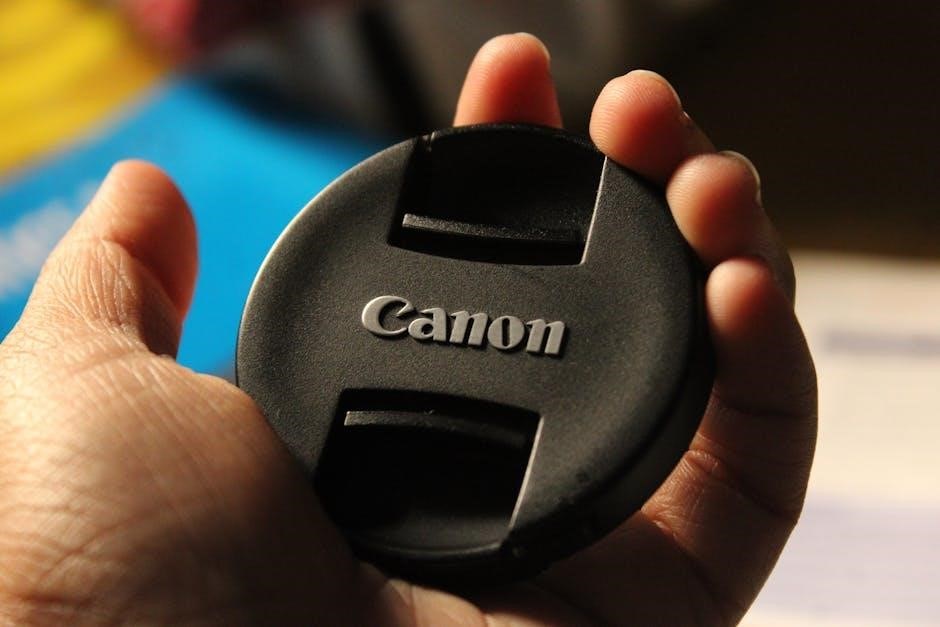
Program (P) mode balances aperture and shutter speed for general shooting. Aperture Priority (Av) prioritizes controlling depth of field – ideal for portraits or landscapes. Shutter Priority (Tv) excels at capturing motion, freezing action or creating motion blur. Finally, Manual (M) mode provides complete creative control, allowing independent adjustment of both settings.
Mastering these modes unlocks the 5D Mark IV’s full potential, enabling photographers to adapt to diverse conditions and achieve desired artistic effects with precision.
Utilizing the 30.4MP Full Frame CMOS Sensor
The 30.4MP full-frame CMOS sensor is central to the 5D Mark IV’s exceptional image quality. This sensor size captures significantly more light, resulting in richer detail, wider dynamic range, and superior low-light performance.
Photographers can leverage various resolution options for different needs, balancing file size and detail. The sensor, paired with the DIGIC 6 processor, delivers high-resolution images packed with detail and excellent clarity, making it ideal for large prints and cropping.
Image Quality and Resolution Options
The Canon EOS 5D Mark IV offers diverse image quality and resolution settings to suit various shooting scenarios. Users can select from RAW, JPEG, or both, with RAW providing maximum editing flexibility. Resolution choices include Large, Medium, and Small, impacting file size and detail.
Higher resolutions are ideal for large prints and cropping, while smaller resolutions are suitable for web use or when storage space is limited. Understanding these options allows photographers to optimize image quality based on their specific needs and workflow.
Recording 4K Video
The Canon EOS 5D Mark IV empowers filmmakers with stunning 4K video recording capabilities. It supports DCI 4K (4096 x 2160) at up to 30fps, delivering exceptional detail and cinematic quality. Before filming, consult pages 334-343 of the instruction manual for crucial settings.
Considerations include choosing appropriate frame rates, utilizing a fast SD card for high bitrate recording, and understanding the camera’s limitations regarding recording time. Mastering these settings unlocks the full potential of the 5D Mark IV for professional video projects;
Settings and Considerations for 4K Filmmaking
Successful 4K filmmaking with the 5D Mark IV requires careful attention to detail. Prioritize a fast SD card capable of handling the high data rates. Lens aberration correction, when enabled, impacts performance; be mindful of this.
Explore options like All-I or IPB compression for balancing file size and quality. Monitor recording time limitations, as the camera can overheat during extended 4K sessions. Proper exposure and white balance are crucial for optimal results. Refer to the manual for detailed guidance on these settings.
Canon Log and Color Grading
Canon Log expands dynamic range, ideal for challenging lighting conditions. Before shooting in Canon Log, thoroughly review pages 334-343 of the 5D Mark IV instruction manual for proper setup and understanding. This profile captures more information, requiring color grading in post-production to achieve a natural look.
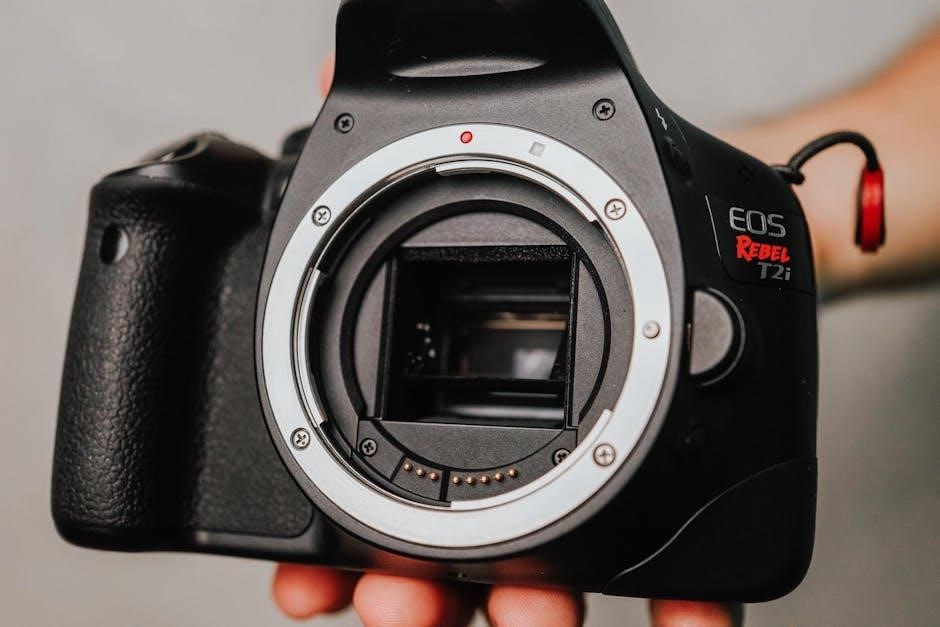
Utilize compatible editing software to interpret the Canon Log footage. Proper exposure is vital when shooting in Canon Log; avoid clipping highlights. Mastering Canon Log unlocks significant flexibility during the color grading process, enhancing your video’s visual impact.
Using Canon Log for Enhanced Dynamic Range
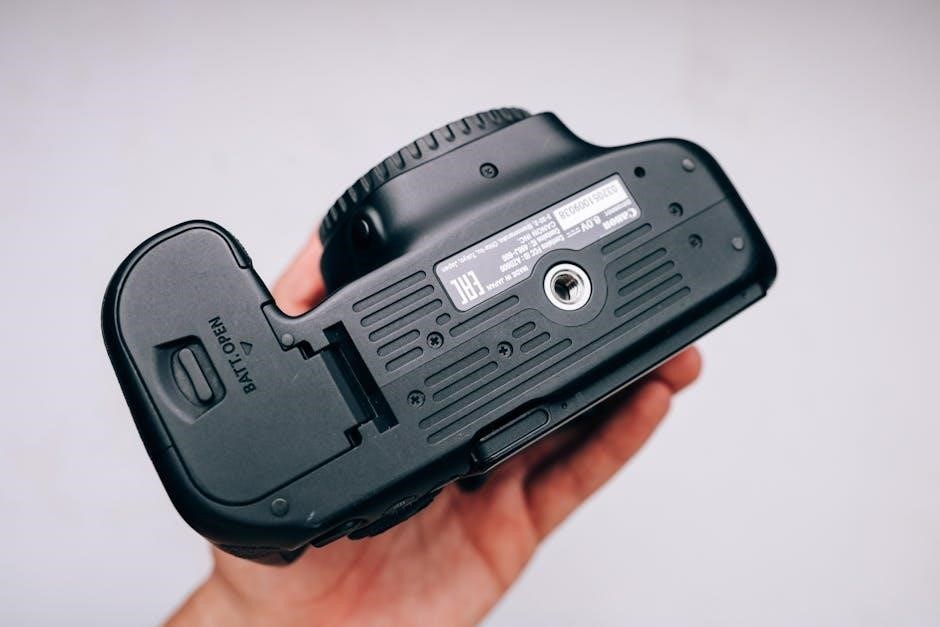
Canon Log significantly boosts dynamic range, preserving detail in both highlights and shadows – crucial for high-contrast scenes. This allows for greater flexibility in post-production color grading, recovering details that would otherwise be lost. Remember to consult pages 334-343 of the 5D Mark IV manual before implementation.
Shooting in Canon Log necessitates careful exposure; prioritize avoiding overexposed highlights. Post-processing is essential to bring the footage to a visually appealing standard. It’s a powerful tool for filmmakers seeking cinematic results and maximum control over their image.
Leveraging Dual Pixel CMOS AF for Video
Dual Pixel CMOS AF delivers remarkably smooth and accurate autofocus during video recording with the 5D Mark IV. Unlike traditional autofocus systems, it samples a wider area, resulting in fluid transitions and reliable subject tracking. This technology is a significant advantage for run-and-gun filmmaking or situations requiring continuous focus adjustments.
Utilize the touchscreen for precise focus point selection. Experiment with different AF modes to optimize performance for your specific shooting scenario. Dual Pixel CMOS AF elevates video quality, minimizing focus hunting and ensuring professional-looking footage.
Smooth and Accurate Autofocus in Video Mode
The Canon EOS 5D Mark IV excels in video autofocus thanks to its Dual Pixel CMOS AF system. This technology provides exceptionally smooth and accurate focusing, crucial for professional-quality video. It minimizes focus “hunting” – the noticeable back-and-forth adjustment – common in traditional systems.
Achieve cinematic results by leveraging face detection and subject tracking. Dual Pixel CMOS AF allows for natural-looking rack focus transitions. Experiment with different AF settings to tailor performance to your specific needs, ensuring consistently sharp and engaging video footage.
Downloading Drivers, Software, and Firmware
Maintaining your Canon EOS 5D Mark IV requires regularly checking for and installing the latest updates. Canon provides drivers, software, and firmware downloads through its official support website – Canon Central and North Africa is a key resource. These updates enhance camera performance, fix bugs, and add new features.
Firmware updates are particularly important, often improving autofocus, image quality, and video capabilities. Download the correct files for your camera model and carefully follow the installation instructions to avoid any issues. Regularly checking for updates ensures optimal functionality.
Keeping Your Camera Up-to-Date
Consistent performance and access to new features for your Canon EOS 5D Mark IV depend on regular updates. Canon frequently releases firmware updates addressing bugs and improving functionality. Checking the Canon support website regularly is crucial for downloading these updates.
Software and drivers also require periodic updates to ensure compatibility with your computer and editing software. Staying current with these updates guarantees a smooth workflow and optimal image processing. Prioritize these updates to maximize your camera’s potential and longevity.
Troubleshooting Common Issues
Encountering problems with your Canon EOS 5D Mark IV is sometimes unavoidable. Common issues include autofocus errors, image quality concerns, or difficulties with video recording; First, consult the comprehensive user manual for potential solutions. Canon’s support website offers extensive troubleshooting resources and FAQs addressing frequent problems.
Resetting the camera to factory settings can often resolve software-related glitches. If issues persist, consider contacting Canon’s technical support for personalized assistance. Regularly checking for firmware updates can also prevent many common problems.
Addressing Frequent Problems and Solutions
Many Canon EOS 5D Mark IV users report issues with memory card compatibility, leading to write errors. Ensure you’re using a supported, high-speed card. Another frequent problem involves Canon Log footage appearing flat; proper color grading is essential. Autofocus inconsistencies can often be resolved by selecting the appropriate AF mode for the shooting situation.
For video issues, verify correct settings for resolution and frame rate. If the camera freezes, try a soft reset. Canon’s online resources and the official manual provide detailed solutions for these and other common problems.
Resources and Further Learning
Canon provides extensive support for the EOS 5D Mark IV, including downloadable drivers, software, and the complete instruction manual on their official website (Canon Central and North Africa). Numerous online tutorials, both free and paid, are available on platforms like YouTube and Skillshare, offering in-depth guidance.
For community support, explore photography forums and Facebook groups dedicated to Canon cameras. Amazon.com also offers user guides, like the “Complete Step-by-Step Manual,” for beginners. These resources will help you master your camera’s capabilities.
Canon Support and Online Tutorials
Canon’s official website is the primary source for support, offering downloadable drivers, software updates, and firmware for the EOS 5D Mark IV. Access to online technical support and troubleshooting guides is readily available through Canon Central and North Africa’s support section.
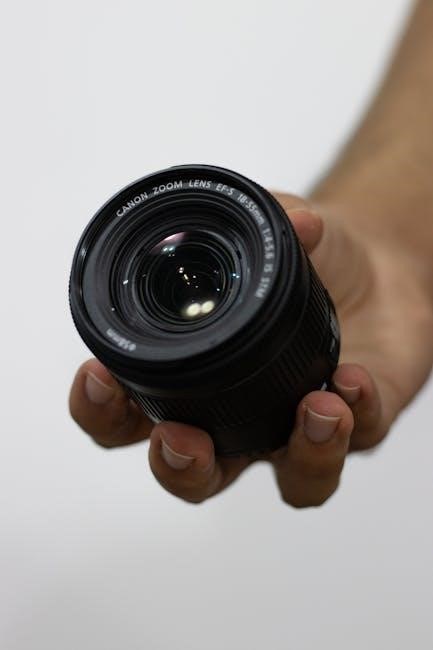
Beyond official resources, a wealth of online tutorials exists. YouTube channels dedicated to photography provide practical demonstrations, while platforms like Skillshare offer structured courses. These resources cater to all skill levels, helping users fully utilize their camera.
Related Posts
samsung mc12j8035ct manual
Download the Samsung MC12J8035CT manual in PDF, learn quick setup, maintenance, and troubleshooting. Get step-by-step instructions and FAQs for smooth operation.

gaggia anima manual
Get the ultimate Gaggia Anima manual with step‑by‑step instructions, maintenance tips, and quick fixes to keep your espresso machine running smoothly.
cobra security camera manual
Lost your Cobra security camera manual? Find easy-to-follow guides, setup instructions, & troubleshooting tips right here! Keep your home safe & secure. **Cobra Security Camera**